















Premium mastering. World-class sound.
Premium mastering.
World-class sound.
Premium mastering. World-class sound.
Warm Audio Mastering.
Warm Audio Mastering.
Warm Audio Mastering.
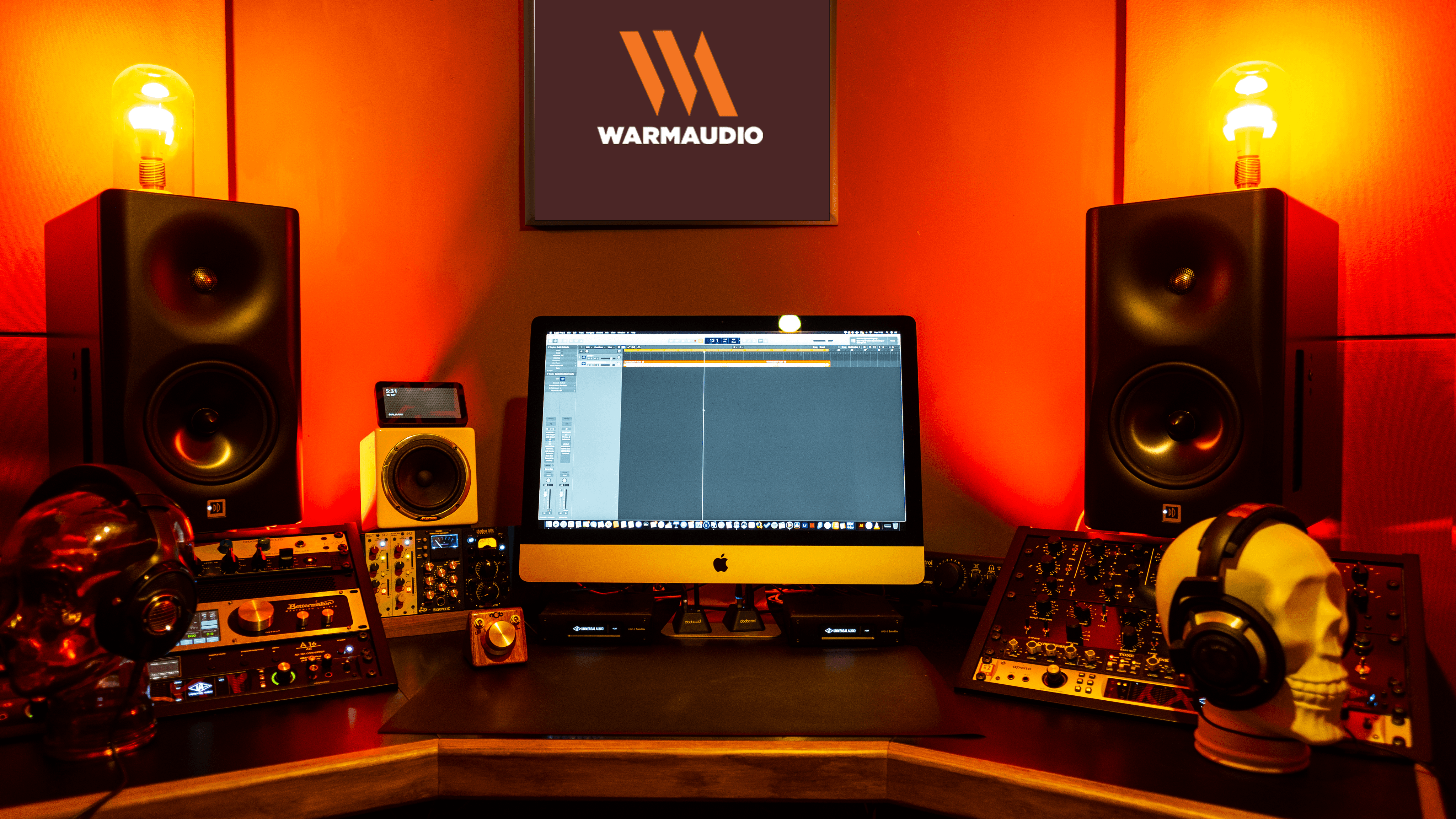
I have re-mortgaged my house to buy boxes that make your music and these labels sound all analog’y and stuff.
I have re-mortgaged my house to buy boxes that make your music and these labels sound all analog’y and stuff.
What they say
What they say
"So nice to meet a mastering engineer who is sympathetic to the source material, while giving me the modern punch, clarity and loudness I require from my masters!."

Max Chapman
DJ, Producer"Having experienced some quite frankly awful mastering in the past, it's always a relief when you get back exactly what you were looking for in a mastered track. I have worked with many mastering engineers and Russ is by far my favourite."

Scott Diaz
DJ, Producer"Large never sounded as good as it has with Russ doing the mastering. I trust him more than my wife ha ha"

Jeff Craven
CEO, Large Records"One of the standout elements of the service Warm Audio provides is communication, If you want your music to sound like it's best possible self, Russ can do it! ."

CamelPhat
DJ, Producer
Pricing
Pricing
Clear & simple.
Clear & simple.
Stereo Master
£20
Single Stereo Track
4-7 Day Turnaround
Additional £20 for instrumentals or radio edits
Order Now
Other ways to pay include revolut.com. A fast and secure payment link on request and you wont incur Paypal fees. Email me for deets.
Other ways to pay include revolut.com. A fast and secure payment link on request and you wont incur Paypal fees. Email me for deets.
This bit looks long, which bit should I skip to so I can read the good stuff?
This bit looks long, which bit should I skip to so I can read the good stuff?
If you already know all about mastering then you probably don’t need to read this at all. The internet is your oyster, go look at a monkey peeing in its own mouth or something.
If you know absolutely nothing about mastering, and would like to know at least a little, then it would probably be a good idea to read all the information I’ve provided on this site. Yes, I know, it’s long winded, but you never know, you might learn something. Possibly even about mastering!.
However what I will explain is Warm Audio specialise in audio mastering services delivering the highest standards throughout that cannot be achieved in a traditional home studio environment. This is because I own a pair of fully trained ears and have a disturbing fetish for collecting expensive first class analogue equipment that will make your music compete against all the other releases out there.
If you already know all about mastering then you probably don’t need to read this at all. The internet is your oyster, go look at a monkey peeing in its own mouth or something.
If you know absolutely nothing about mastering, and would like to know at least a little, then it would probably be a good idea to read all the information I’ve provided on this site. Yes, I know, it’s long winded, but you never know, you might learn something. Possibly even about mastering!.
However what I will explain is Warm Audio specialise in audio mastering services delivering the highest standards throughout that cannot be achieved in a traditional home studio environment. This is because I own a pair of fully trained ears and have a disturbing fetish for collecting expensive first class analogue equipment that will make your music compete against all the other releases out there.
What is mastering?
What is mastering?
What is mastering?
There are many definitions of audio mastering. Most commonly, though, the term mastering is used to refer to the process of taking an audio mix and preparing it for distribution. There are several considerations in this process: unifying the sound of a record, maintaining consistency across an album, and preparing for distribution. The goal is to correct mix balance issues and enhance particular sonic characteristics, taking a good mix (usually in the form of a stereo file) and putting the final touches on it. This can involve adjusting levels and general “sweetening” of the mix. Think of it as the difference between a good-sounding mix and a professional-sounding, finished master..
There are many definitions of audio mastering. Most commonly, though, the term mastering is used to refer to the process of taking an audio mix and preparing it for distribution. There are several considerations in this process: unifying the sound of a record, maintaining consistency across an album, and preparing for distribution. The goal is to correct mix balance issues and enhance particular sonic characteristics, taking a good mix (usually in the form of a stereo file) and putting the final touches on it. This can involve adjusting levels and general “sweetening” of the mix. Think of it as the difference between a good-sounding mix and a professional-sounding, finished master..


What does it mean for me?
What does it mean for me?
What does it mean for me?
Well mastered tracks sound better - bigger, clearer, wider, more coherent and, yes, louder (hopefully not too loud, but more on that later).
Well mastered tracks are free from pops and clicks that may have slipped through the mixing process, as well as any noise that detracts from the music.
Well mastered records have a track spacing that makes artistic sense, highlighting the contrast and flow of the music. Any fades at the beginning and end of the tracks sound natural and appropriate for the music.
BADLY mastered records actually sound worse than the original, unmastered mixes.
Well mastered tracks sound better - bigger, clearer, wider, more coherent and, yes, louder (hopefully not too loud, but more on that later).
Well mastered tracks are free from pops and clicks that may have slipped through the mixing process, as well as any noise that detracts from the music.
Well mastered records have a track spacing that makes artistic sense, highlighting the contrast and flow of the music. Any fades at the beginning and end of the tracks sound natural and appropriate for the music.
Badly mastered records actually sound worse than the original, unmastered mixes.
Can mastering make my terrible mix sound good?
Can mastering make my terrible mix sound good?
Can mastering make my terrible mix sound good?
Unfortunately not. Mastering can improve a terrible mix to an extent (and any good ME will absolutely try and improve it as much as they can while retaining the original spirit of the recording), and it can certainly take a mix from “good” to “great”, but there is a limit to what can be done. Think of mastering as a full wax and shine for your audio – a full wax and shine is not really going to help your battered 1978 Ford Escort in the same way it might your full on Jeremy Clarkson speed machine.
If in doubt, the old “roll a turd in glitter” analogy should suffice. Not that I just compared your music to a turd!
Unfortunately not. Mastering can improve a terrible mix to an extent (and any good ME will absolutely try and improve it as much as they can while retaining the original spirit of the recording), and it can certainly take a mix from “good” to “great”, but there is a limit to what can be done. Think of mastering as a full wax and shine for your audio – a full wax and shine is not really going to help your battered 1978 Ford Escort in the same way it might your full on Jeremy Clarkson speed machine.
If in doubt, the old “roll a turd in glitter” analogy should suffice. Not that I just compared your music to a turd!

So, What do mastering engineers actually do?
So, What do mastering engineers actually do?
The typical mastering process begins with simply listening to all the tracks that are to be included in the finished product and deciding whether there is anything that can be done at this stage to make them sound better. If the answer is no, congratulations, you have made an absolutely outstanding mix with perfect impact, tonal balance and coherence with the rest of the tracks around it. Of course, these situations are rare, and there will usually be something that can be done to improve matters. Things that can be done might include equalisation, compression, limiting and all other manner of techniques.
The important thing to understand is that each production, and each product, must be treated as an individual piece of sound (within the context of the tracks around it of course) and there is no one process that is applied to every master. Sure, I might use a certain, subtle amount of brick wall limiting 95% of the time, but knowing the 5% of the time not to use it is just as important. MASTERING CANNOT BE ACCOMPLISHED EFFECTIVELY USING PRESETS, whether they are on a plugin in your computer or simply a default idea in your mind. Could you imagine deciding what to wear for a day hiking outdoors without knowing anything about what the weather and conditions are likely to be? I wouldn’t want to be the guy who turns up to climb mount everest in swimming trunks and a vest. That would just be embarrassing.
Generally, the results speak for themselves. If it sounds better than before then it doesn’t really matter how the result is achieved. If it sounds worse than before then something has gone badly wrong and a change needs to be made.
The typical mastering process begins with simply listening to all the tracks that are to be included in the finished product and deciding whether there is anything that can be done at this stage to make them sound better. If the answer is no, congratulations, you have made an absolutely outstanding mix with perfect impact, tonal balance and coherence with the rest of the tracks around it. Of course, these situations are rare, and there will usually be something that can be done to improve matters. Things that can be done might include equalisation, compression, limiting and all other manner of techniques.
The important thing to understand is that each production, and each product, must be treated as an individual piece of sound (within the context of the tracks around it of course) and there is no one process that is applied to every master. Sure, I might use a certain, subtle amount of brick wall limiting 95% of the time, but knowing the 5% of the time not to use it is just as important. MASTERING CANNOT BE ACCOMPLISHED EFFECTIVELY USING PRESETS, whether they are on a plugin in your computer or simply a default idea in your mind. Could you imagine deciding what to wear for a day hiking outdoors without knowing anything about what the weather and conditions are likely to be? I wouldn’t want to be the guy who turns up to climb mount everest in swimming trunks and a vest. That would just be embarrassing.
Generally, the results speak for themselves. If it sounds better than before then it doesn’t really matter how the result is achieved. If it sounds worse than before then something has gone badly wrong and a change needs to be made.
WTF, So mastering can actually make my music sound worse?!
WTF, So mastering can actually make my music sound worse?!
One of the main advantages of hiring a mastering engineer to master your record is the fresh perspective that he/she brings to proceedings. He/she can hear things in your mix that you can’t because he/she listens as a listener not as someone who has been mixing the song for 10 hours. If mastering is done by the mix engineer then the audio processing part of the mastering phase does not make sense – why weren’t those changes made during the mix if they were such obvious problems?
The other factor that comes into play is experience. Any given ME will have mastered many, many records. This is likely to be a significantly broader range of experience than anyone other than a dedicated ME. Mastering is like anything else – the more you do it the better you get.
Anyway, feel free to master your own record. You might do a stellar job. And I mean that sincerely, not as some kind of snide remark! Just bear in mind the potential pitfalls of doing so.
One of the main advantages of hiring a mastering engineer to master your record is the fresh perspective that he/she brings to proceedings. He/she can hear things in your mix that you can’t because he/she listens as a listener not as someone who has been mixing the song for 10 hours. If mastering is done by the mix engineer then the audio processing part of the mastering phase does not make sense – why weren’t those changes made during the mix if they were such obvious problems?
The other factor that comes into play is experience. Any given ME will have mastered many, many records. This is likely to be a significantly broader range of experience than anyone other than a dedicated ME. Mastering is like anything else – the more you do it the better you get.
Anyway, feel free to master your own record. You might do a stellar job. And I mean that sincerely, not as some kind of snide remark! Just bear in mind the potential pitfalls of doing so.
Should I/My best friend/The mix engineer master my track?
Should I/My best friend/The mix engineer master my track?
Yes, BAD mastering can do untold damage to your carefully crafted mixes; destroying balances, mangling high or low frequencies, and introducing horrible distortion through an over-use of brick wall limiters or clipping. A good mastering engineer is like a good doctor, and the first rule of his oath is do no harm.
If something makes the mix sound worse, it should not be done. Of course, a bad mastering engineer would have no problem giving your delicately balanced mix an unwanted boob job and any amount of unneeded botox if it made his dick feel bigger (apologies to all the female mastering engineers out there, I’m sure you can think of a suitably disgusting replacement metaphor if you want to). You can probably tell a bad mastering engineer when your master comes back and it sound nothing like the mix you sent in. If you wanted it to sound nothing like the mix you sent, you would have sent a different mix, right? Once again, the number one rule for any good mastering engineer is do no harm. I cannot stress this enough. The ME should be enhancing the mix, not changing the mix.
That’s not to say that a good mastering engineer might not use certain trickery to alter internal balances a little for the benefit of the production, such as bringing the vocal to the fore with a little judicious use of EQ. The important thing is that any processing that is done to the mix should be in the spirit of what already exists.
Yes, BAD mastering can do untold damage to your carefully crafted mixes; destroying balances, mangling high or low frequencies, and introducing horrible distortion through an over-use of brick wall limiters or clipping. A good mastering engineer is like a good doctor, and the first rule of his oath is do no harm.
If something makes the mix sound worse, it should not be done. Of course, a bad mastering engineer would have no problem giving your delicately balanced mix an unwanted boob job and any amount of unneeded botox if it made his dick feel bigger (apologies to all the female mastering engineers out there, I’m sure you can think of a suitably disgusting replacement metaphor if you want to). You can probably tell a bad mastering engineer when your master comes back and it sound nothing like the mix you sent in. If you wanted it to sound nothing like the mix you sent, you would have sent a different mix, right? Once again, the number one rule for any good mastering engineer is do no harm. I cannot stress this enough. The ME should be enhancing the mix, not changing the mix.
That’s not to say that a good mastering engineer might not use certain trickery to alter internal balances a little for the benefit of the production, such as bringing the vocal to the fore with a little judicious use of EQ. The important thing is that any processing that is done to the mix should be in the spirit of what already exists.

My origin story (no gamma ray exposure involved)
My origin story (no gamma ray exposure involved)
My journey through electronic music began in the early 90s, behind the decks at some of the UK’s biggest hardcore events Dreamscape, HelterSkelter, and Fusion. Those nights were pure energy and chaos and they sparked a lifelong obsession with sound.
As the scene evolved, I moved from the stage to the studio, ghost-producing and releasing music under various aliases. By the early 2000s, I had founded one of the most respected dance record labels of its time a hub for quality underground releases and cutting-edge production.
But it was during that era that I hit a turning point. Tracks I sent off for mastering often came back sounding worse — duller, flatter, lacking the punch I knew they could have. That frustration pushed me down the rabbit hole of mastering. I started learning everything I could, building up analog gear, training my ears, and chasing that perfect sound.
That decision changed everything.
Fast forward to today, and mastering isn’t just something I do it’s what I live for. I’ve spent years refining my craft and that dedication has made me the go-to person for artists and labels who want their music to sound incredible loud, clear, warm.
If you’re serious about your sound, I’m here to make sure your music hits exactly the way it should.
My journey through electronic music began in the early 90s, behind the decks at some of the UK’s biggest hardcore events Dreamscape, HelterSkelter, and Fusion. Those nights were pure energy and chaos and they sparked a lifelong obsession with sound.
As the scene evolved, I moved from the stage to the studio, ghost-producing and releasing music under various aliases. By the early 2000s, I had founded one of the most respected dance record labels of its time a hub for quality underground releases and cutting-edge production.
But it was during that era that I hit a turning point. Tracks I sent off for mastering often came back sounding worse — duller, flatter, lacking the punch I knew they could have. That frustration pushed me down the rabbit hole of mastering. I started learning everything I could, building up analog gear, training my ears, and chasing that perfect sound.
That decision changed everything.
Fast forward to today, and mastering isn’t just something I do it’s what I live for. I’ve spent years refining my craft and that dedication has made me the go-to person for artists and labels who want their music to sound incredible loud, clear, warm.
If you’re serious about your sound, I’m here to make sure your music hits exactly the way it should.
My journey through electronic music began in the early 90s, behind the decks at some of the UK’s biggest hardcore events Dreamscape, HelterSkelter, and Fusion. Those nights were pure energy and chaos and they sparked a lifelong obsession with sound.
As the scene evolved, I moved from the stage to the studio, ghost-producing and releasing music under various aliases. By the early 2000s, I had founded one of the most respected dance record labels of its time a hub for quality underground releases and cutting-edge production.
But it was during that era that I hit a turning point. Tracks I sent off for mastering often came back sounding worse — duller, flatter, lacking the punch I knew they could have. That frustration pushed me down the rabbit hole of mastering. I started learning everything I could, building up analog gear, training my ears, and chasing that perfect sound.
That decision changed everything.
Fast forward to today, and mastering isn’t just something I do it’s what I live for. I’ve spent years refining my craft and that dedication has made me the go-to person for artists and labels who want their music to sound incredible loud, clear, warm.
If you’re serious about your sound, I’m here to make sure your music hits exactly the way it should.
40+
40+
Years life experience
Years life experience
£££££
£££££
Spent on audio equipment
Spent on audio equipment
100%
100%
Living my best life
Living my best life
My Precious
My Precious
AD/DA Conversion
Crane Song Solaris
Lavry Quintessence
Monitoring
Dutch & Dutch 8c Active loudspeakers
Focal Utopia
Sennheiser hd 800s
Audio Processing
Dangerous Music Bax EQ
Thermionic Swift Mastering EQ
Thermionic Kite Mastering EQ
Manley Massive Passive EQ
Electrodyne 2511 EQ
Elysia Filter Mastering Edition
SSl Fusion
API 2500 Compressor
Shadow Hills Dual Vandergraph
Elysia Mpressor
SSl The Bus+
Looptrotter Monster
Rupert Neve 542 Pair
Bettermaker Limiter
Cabling
Van Damme & Van Den Hul audio & Apogee digital cables
Software
Full UAD Suite
Full Slate Digital Suite
AD/DA Conversion
Crane Song Solaris
Lavry Quintessence
Monitoring
Dutch & Dutch 8c Active loudspeakers
Focal Utopia
Sennheiser hd 800s
Audio Processing
Dangerous Music Bax EQ
Thermionic Swift Mastering EQ
Thermionic Kite Mastering EQ
Manley Massive Passive EQ
Electrodyne 2511 EQ
Elysia Filter Mastering Edition
SSl Fusion
API 2500 Compressor
Shadow Hills Dual Vandergraph
Elysia Mpressor
SSl The Bus+
Looptrotter Monster
Rupert Neve 542 Pair
Bettermaker Limiter
Cabling
Van Damme & Van Den Hul audio & Apogee digital cables
Software
Full UAD Suite
Full Slate Digital Suite
Anything else I need to know before sending my masterpiece to you?
Anything else I need to know before sending my masterpiece to you?
How should i send the premaster?
Please leave plenty of headroom. -6db has always been the norm however as close as you can get it will suffice. Remove everything on the Master Bus when you export, this includes compressors, EQ's, Tape, saturation FX etc.
How should i send the premaster?
Please leave plenty of headroom. -6db has always been the norm however as close as you can get it will suffice. Remove everything on the Master Bus when you export, this includes compressors, EQ's, Tape, saturation FX etc.
How should i send the premaster?
Please leave plenty of headroom. -6db has always been the norm however as close as you can get it will suffice. Remove everything on the Master Bus when you export, this includes compressors, EQ's, Tape, saturation FX etc.
Where do I send my music.
Send tracks via any file transfer service (we-transfer/dropbox preferred) to russ@warmaudiomastering.co.uk
Where do I send my music.
Send tracks via any file transfer service (we-transfer/dropbox preferred) to russ@warmaudiomastering.co.uk
Where do I send my music.
Send tracks via any file transfer service (we-transfer/dropbox preferred) to russ@warmaudiomastering.co.uk
Anything Else?
Include a physical reference track so I can import into the session and reference a true loudness reading of LUFS you wish to achieve. Try your best to send a track that is similar to your own. NOT A YOUTUBE or SOUNDCLOUD link
Anything Else?
Include a physical reference track so I can import into the session and reference a true loudness reading of LUFS you wish to achieve. Try your best to send a track that is similar to your own. NOT A YOUTUBE or SOUNDCLOUD link
Anything Else?
Include a physical reference track so I can import into the session and reference a true loudness reading of LUFS you wish to achieve. Try your best to send a track that is similar to your own. NOT A YOUTUBE or SOUNDCLOUD link
For extra brownie points.
Please also send one of your own tracks that has been previously mastered so I can reference for consistency and so I know how to improve or provide valid feedback. I ask many artists to consider having a stab at mastering the track / tracks they are sending me or using a service like Landr just so you can hear the improvements I make but more importantly you can understand in advance any glaring mix issues prior to sending including artefacts or distortion. I will not be able to remove these from your track without consequences.
For extra brownie points.
Please also send one of your own tracks that has been previously mastered so I can reference for consistency and so I know how to improve or provide valid feedback. I ask many artists to consider having a stab at mastering the track / tracks they are sending me or using a service like Landr just so you can hear the improvements I make but more importantly you can understand in advance any glaring mix issues prior to sending including artefacts or distortion. I will not be able to remove these from your track without consequences.
For extra brownie points.
Please also send one of your own tracks that has been previously mastered so I can reference for consistency and so I know how to improve or provide valid feedback. I ask many artists to consider having a stab at mastering the track / tracks they are sending me or using a service like Landr just so you can hear the improvements I make but more importantly you can understand in advance any glaring mix issues prior to sending including artefacts or distortion. I will not be able to remove these from your track without consequences.
Do you Master for Vinyl?
Indeed we do however when mastering for vinyl be aware that your tracks low end will be centred [Mono'] up to 200hz if necessary or a high cut may be required, Additionally Make sure you attenuate any excessively high frequencies otherwise highs can sound slightly more distorted and less clear when pressed.
Do you Master for Vinyl?
Indeed we do however when mastering for vinyl be aware that your tracks low end will be centred [Mono'] up to 200hz if necessary or a high cut may be required, Additionally Make sure you attenuate any excessively high frequencies otherwise highs can sound slightly more distorted and less clear when pressed.
Do you Master for Vinyl?
Indeed we do however when mastering for vinyl be aware that your tracks low end will be centred [Mono'] up to 200hz if necessary or a high cut may be required, Additionally Make sure you attenuate any excessively high frequencies otherwise highs can sound slightly more distorted and less clear when pressed.
"/><stop offset="1" stop-color="rgb(112, 36, 196)"/></linearGradient></defs><g d="M 0 256 C 0 114.615 114.615 0 256 0 C 397.385 0 512 114.615 512 256 C 512 397.385 397.385 512 256 512 C 114.615 512 0 397.385 0 256 Z M 307.739 128 L 204.261 128 C 162.166 128.056 128.056 162.166 128 204.261 L 128 307.739 C 128.056 349.834 162.166 383.944 204.261 384 L 307.739 384 C 349.841 383.963 383.963 349.841 384 307.739 L 384 204.261 C 383.944 162.166 349.834 128.056 307.739 128 Z M 358.265 307.739 C 358.265 335.644 335.644 358.265 307.739 358.265 L 204.261 358.265 C 176.356 358.265 153.735 335.644 153.735 307.739 L 153.735 204.261 C 153.735 176.356 176.356 153.735 204.261 153.735 L 307.739 153.735 C 335.644 153.735 358.265 176.356 358.265 204.261 Z M 256 189.811 C 229.209 189.797 205.049 205.927 194.791 230.676 C 184.532 255.425 190.195 283.916 209.139 302.861 C 228.084 321.805 256.575 327.468 281.324 317.209 C 306.073 306.951 322.203 282.791 322.189 256 C 322.152 219.46 292.54 189.848 256 189.811 Z M 256 296.421 C 233.676 296.421 215.579 278.324 215.579 256 C 215.579 233.676 233.676 215.579 256 215.579 C 278.324 215.579 296.421 233.676 296.421 256 C 296.421 278.324 278.324 296.421 256 296.421 Z M 306.223 189.811 C 306.223 180.769 313.553 173.44 322.594 173.44 C 331.635 173.44 338.964 180.769 338.964 189.811 C 338.964 198.852 331.635 206.181 322.594 206.181 C 313.553 206.181 306.223 198.852 306.223 189.811 Z" fill="transparent" height="512px" id="Uf64e56LK" width="512px"><g d="M 0 256 C 0 114.615 114.615 0 256 0 C 397.385 0 512 114.615 512 256 C 512 397.385 397.385 512 256 512 C 114.615 512 0 397.385 0 256 Z M 307.739 128 L 204.261 128 C 162.166 128.056 128.056 162.166 128 204.261 L 128 307.739 C 128.056 349.834 162.166 383.944 204.261 384 L 307.739 384 C 349.841 383.963 383.963 349.841 384 307.739 L 384 204.261 C 383.944 162.166 349.834 128.056 307.739 128 Z M 358.265 307.739 C 358.265 335.644 335.644 358.265 307.739 358.265 L 204.261 358.265 C 176.356 358.265 153.735 335.644 153.735 307.739 L 153.735 204.261 C 153.735 176.356 176.356 153.735 204.261 153.735 L 307.739 153.735 C 335.644 153.735 358.265 176.356 358.265 204.261 Z M 256 189.811 C 229.209 189.797 205.049 205.927 194.791 230.676 C 184.532 255.425 190.195 283.916 209.139 302.861 C 228.084 321.805 256.575 327.468 281.324 317.209 C 306.073 306.951 322.203 282.791 322.189 256 C 322.152 219.46 292.54 189.848 256 189.811 Z M 256 296.421 C 233.676 296.421 215.579 278.324 215.579 256 C 215.579 233.676 233.676 215.579 256 215.579 C 278.324 215.579 296.421 233.676 296.421 256 C 296.421 278.324 278.324 296.421 256 296.421 Z M 306.223 189.811 C 306.223 180.769 313.553 173.44 322.594 173.44 C 331.635 173.44 338.964 180.769 338.964 189.811 C 338.964 198.852 331.635 206.181 322.594 206.181 C 313.553 206.181 306.223 198.852 306.223 189.811 Z" fill="transparent" height="512px" id="Tdw62O5O0" width="512px"><path d="M 0 256 C 0 114.615 114.615 0 256 0 C 397.385 0 512 114.615 512 256 C 512 397.385 397.385 512 256 512 C 114.615 512 0 397.385 0 256 Z" fill="url(%23WcitQI2hx-2463448865-linear-gradient)" height="512px" id="WcitQI2hx" width="512px"/><g d="M 179.739 0 L 76.261 0 C 34.166 0.056 0.056 34.166 0 76.261 L 0 179.739 C 0.056 221.834 34.166 255.944 76.261 256 L 179.739 256 C 221.841 255.963 255.963 221.841 256 179.739 L 256 76.261 C 255.944 34.166 221.834 0.056 179.739 0 Z M 230.265 179.739 C 230.265 207.644 207.644 230.265 179.739 230.265 L 76.261 230.265 C 48.356 230.265 25.735 207.644 25.735 179.739 L 25.735 76.261 C 25.735 48.356 48.356 25.735 76.261 25.735 L 179.739 25.735 C 207.644 25.735 230.265 48.356 230.265 76.261 Z M 128 61.811 C 101.209 61.797 77.049 77.927 66.791 102.676 C 56.532 127.425 62.195 155.916 81.139 174.861 C 100.084 193.805 128.575 199.468 153.324 189.209 C 178.073 178.951 194.203 154.791 194.189 128 C 194.152 91.46 164.54 61.848 128 61.811 Z M 128 168.421 C 105.676 168.421 87.579 150.324 87.579 128 C 87.579 105.676 105.676 87.579 128 87.579 C 150.324 87.579 168.421 105.676 168.421 128 C 168.421 150.324 150.324 168.421 128 168.421 Z M 178.223 61.811 C 178.223 52.769 185.553 45.44 194.594 45.44 C 203.635 45.44 210.964 52.769 210.964 61.811 C 210.964 70.852 203.635 78.181 194.594 78.181 C 185.553 78.181 178.223 70.852 178.223 61.811 Z" fill="transparent" height="256px" id="asLarxUbZ" transform="translate(128 128)" width="256px"><path d="M 179.739 0 L 76.261 0 C 34.166 0.056 0.056 34.166 0 76.261 L 0 179.739 C 0.056 221.834 34.166 255.944 76.261 256 L 179.739 256 C 221.841 255.963 255.963 221.841 256 179.739 L 256 76.261 C 255.944 34.166 221.834 0.056 179.739 0 Z M 230.265 179.739 C 230.265 207.644 207.644 230.265 179.739 230.265 L 76.261 230.265 C 48.356 230.265 25.735 207.644 25.735 179.739 L 25.735 76.261 C 25.735 48.356 48.356 25.735 76.261 25.735 L 179.739 25.735 C 207.644 25.735 230.265 48.356 230.265 76.261 Z" fill="rgb(255, 255, 255)" height="256px" id="XILuVZQXo" width="256px"/><path d="M 66.259 0 C 39.468 -0.014 15.308 16.116 5.049 40.865 C -5.209 65.614 0.454 94.106 19.398 113.05 C 38.342 131.994 66.834 137.658 91.583 127.399 C 116.332 117.14 132.462 92.98 132.448 66.189 C 132.411 29.649 102.799 0.037 66.259 0 Z M 66.259 106.611 C 43.935 106.611 25.838 88.513 25.838 66.189 C 25.838 43.866 43.935 25.768 66.259 25.768 C 88.583 25.768 106.68 43.866 106.68 66.189 C 106.68 88.513 88.583 106.611 66.259 106.611 Z" fill="rgb(255, 255, 255)" height="132.4482516006356px" id="Kd1XyQDjJ" transform="translate(61.741 61.811)" width="132.44825160063547px"/><path d="M 0 16.371 C 0 7.329 7.329 0 16.371 0 C 25.412 0 32.741 7.329 32.741 16.371 C 32.741 25.412 25.412 32.741 16.371 32.741 C 7.329 32.741 0 25.412 0 16.371 Z" fill="rgb(255, 255, 255)" height="32.741052631578924px" id="U5MQLOOrA" transform="translate(178.223 45.44)" width="32.74105263157895px"/></g></g></g></svg>)
" height="512px" id="v5mA4SxAz" width="512px"/><path d="M 250.13 31.958 C 245.01 16.059 228.067 6.661 212.337 4.472 C 156.265 -1.491 99.718 -1.491 43.646 4.472 C 28.05 6.661 11.107 16.194 5.987 31.958 C -1.996 72.631 -1.996 114.468 5.987 155.141 C 11.242 171.006 28.185 180.438 43.916 182.627 C 99.99 188.556 156.532 188.556 212.606 182.627 C 228.202 180.438 245.145 170.872 250.265 155.141 C 258.203 114.459 258.158 72.622 250.13 31.958 Z M 97.507 142.577 L 97.507 44.488 L 177.372 93.533 C 150.459 110.072 124.32 126.173 97.507 142.577 Z" fill="rgb(255, 255, 255)" height="187.07374390819348px" id="iQFcMxHnQ" transform="translate(127.874 162.467)" width="256.18506152162377px"/></g></g></svg>)
" height="512px" id="C3Q3nkf7h" width="512px"/><path d="M 129.819 103.781 L 125.575 139.419 C 125.195 142.848 122.287 145.436 118.838 145.415 L 81.785 145.415 L 81.785 251.183 C 81.804 253.812 79.698 255.963 77.069 256 L 39.309 256 C 38.041 255.982 36.831 255.461 35.947 254.552 C 35.062 253.642 34.576 252.418 34.594 251.149 L 34.796 145.415 L 6.737 145.415 C 3.016 145.415 0 142.399 0 138.678 L 0 103.04 C 0 99.319 3.016 96.303 6.737 96.303 L 34.627 96.303 L 34.627 61.743 C 34.627 21.76 58.408 0 93.238 0 L 121.768 0 C 125.489 0 128.505 3.016 128.505 6.737 L 128.505 36.749 C 128.505 40.47 125.489 43.486 121.768 43.486 L 104.286 43.486 C 85.356 43.789 81.785 52.851 81.785 66.392 L 81.785 96.202 L 123.251 96.202 C 125.164 96.235 126.973 97.08 128.226 98.526 C 129.479 99.972 130.058 101.883 129.819 103.781 Z" fill="rgb(255, 255, 255)" height="256px" id="EVGDzRbGs" transform="translate(191.057 128)" width="129.87194725249856px"/></g></g></svg>)